Testing and Tagging

Allow KRC Electrical to safely test all electrical equipment within your workplace.

  • Licence EC 3425
  • Est. 1987
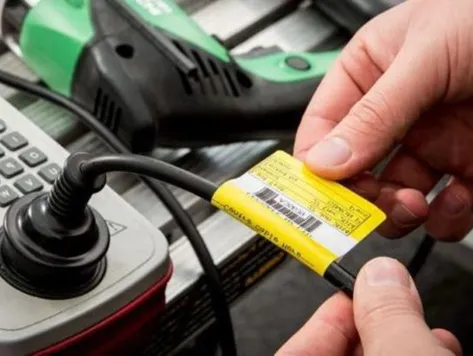
Technician fitting a test tag to an appliance lead after a portable appliance test
Fig. S/12 — Testing & Tagging

Test & tag Perth

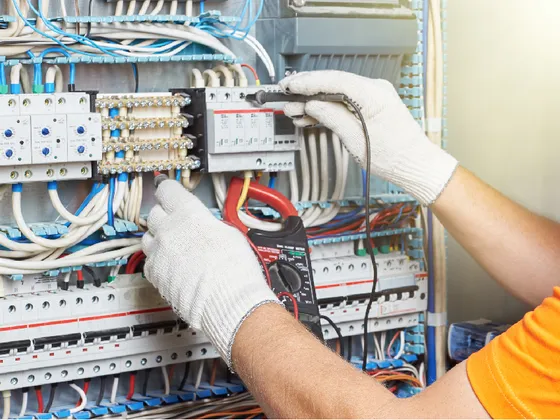
KRC Electrical offers testing and tagging services for all residential and commercial grade equipment. This safety process involves checking all electrical appliances to ensure they're safe to use. KRC uses a two-part method when it comes to testing and tagging. The first is a visual inspection of the appliance, where our trained technicians look for any visual damage. Once that's completed, they use a portable appliance tester to test the machine electrically. From this they can identify any potential electrical faults.

Safety inspections should be regularly performed by all organisations with electrical equipment. Equipment testing can ensure the safety of the workplace as well as the employees regularly using the equipment. A safety inspection and test can minimise the risk of an electrical hazard before it happens, as well as identify defective equipment.

Australian Standard AS/NZS 3760 highlights the necessary guidelines and regulations for the testing of all electrical equipment. This standard outlines and defines test dates and who can be deemed a competent person to carry out tests and tags of electrical appliances.

Why test & tags are important

Construction, demolition and mining industries are required to have all appliances tested and tagged approximately every 3 months. It's important to have these safety checks done for all electrical installations on construction and demolition sites, due to the harsh nature of the industry where equipment is constantly used and likely to deteriorate faster than usual. Throughout the year, the test and tag colours of your appliance will change, ensuring your test tag colour coincides with that specific period.

In WA, plug-in equipment used in harsher conditions — exposed to moisture, heat, vibration, mechanical damage, corrosive chemicals or dust — must be regularly inspected and tested by a competent person under the Work Health and Safety (General) Regulations 2022. In lower-risk workplaces the duty of care still sits with the employer: if someone were hurt by an appliance that wasn't tested and is unsafe, there would be an issue — so the employer must ensure all electrical equipment is safe to use.

Who can test & tag?

You don't have to be a licensed electrician to perform testing and tagging services. According to AS/NZS 3760, the tester must be considered a "competent person". All KRC Electrical employees have undergone a test and tag course, providing them with the skills and knowledge to carry out these services.

What equipment can KRC Electrical test & tag?

KRC Electrical has years of experience ensuring all electrical appliances within a workplace comply with AS/NZS 3760. We can perform testing and tagging services on the following items:

  • Plug tops
  • Single insulated / earthed appliances
  • Double insulated appliances
  • Extension leads
  • Heavy machinery
  • Exit lights
  • Portable RCDs
  • Electric dryers
  • Drills
  • Power points and cords
  • Computers and printers
  • Alarms and much more

How often should this be done?

According to Australian Standards, the number of test and tag checks is based on the type of environment the appliance is in. For each workplace this is different, as they have varying levels of risk — use the planner on this page to see the interval for yours, or call us and we'll share our experience.

100% satisfaction guarantee — we work tirelessly to go above and beyond your requirements.

Licensed WA electrical contractor EC 3425 — ABN 88 156 507 103, NECA member.
Compliance planner

When is your next test due?

Pick your environment and what's on site — get the interval, the next due date and the WA source behind it. Then add the plan to your enquiry in one click.

01 Where is it used?
02 What's on site?
03 When was it last done? (optional)

Your schedule

Your schedule

24-month view

    Reference tableEvery interval and where it comes from
    Inspection and testing intervals by environment
    EnvironmentPlug-in equipment & leadsSafety switches (RCDs)
    Office, retail or classroomRisk-assessedWA Code of Practice · AS/NZS 3760:2022Regularly — you set the cycleWA Code of Practice · WorkSafe WA — RCDs
    Wet, dusty, outdoor or commercial kitchenAt least every 12 monthsWA Code of PracticeRegularly — you set the cycleWA Code of Practice · WorkSafe WA — RCDs
    Factory, workshop or manufacturingEvery 6 monthsWA Code of PracticeRegularly — you set the cycleWA Code of Practice · WorkSafe WA — RCDs
    Commercial cleaning equipmentEvery 6 monthsWA Code of PracticeRegularly — you set the cycleWA Code of Practice · WorkSafe WA — RCDs
    Equipment you hire outEvery 3 months + each hireWA Code of PracticeRegularly — you set the cycleWA Code of Practice · WorkSafe WA — RCDs
    Construction or demolition siteAbout every 3 monthsAS/NZS 3012 · KRC recommendationRegularly — you set the cycleWA Code of Practice · WorkSafe WA — RCDs
    Home or rental propertyNot a home requirementPush-test every 3 monthsBuilding and Energy — RCDs
    1. WA Code of Practice — Managing electrical risks in the workplace — Code of practice (opens in a new tab). WorkSafe WA (DEMIRS), 2025 — WHS (General) Regulations 2022 r.150, 163–165.
    2. AS/NZS 3760:2022 — AS/NZS 3760:2022 In-service safety inspection and testing of electrical equipment and RCDs (opens in a new tab). Standards Australia.
    3. WorkSafe WA — RCDs — Residual current devices (RCDs) (opens in a new tab). WorkSafe WA.
    4. AS/NZS 3012 — AS/NZS 3012 Electrical installations — Construction and demolition sites (opens in a new tab). Standards Australia (mandated on WA construction sites by WHS General Regulations r.163).
    5. KRC recommendation — KRC Electrical service guidance. KRC Electrical.
    6. Building and Energy — RCDs — RCD safety switches (electrical safety in the home) (opens in a new tab). Building and Energy, Government of Western Australia.

    Process

    How testing & tagging works

    1. Agree scope

      What's on site, how it's used and where it lives — that sets the test method and interval.

    2. Inspect & test

      A trained, competent person inspects and tests every item with the right instrument.

    3. Tag & record

      Results recorded: who tested, when, the outcome and the next due date.

    4. Fix & remind

      Faults flagged and remedied, and the next test lined up before it falls due.

    FAQ

    Testing & Tagging: your questions

    Q01How often does equipment need to be tested and tagged in WA?

    It depends on the environment. Under WA's Code of Practice, plug-in equipment in higher-risk environments (wet, dusty, outdoor, corrosive, commercial kitchens) should generally be tested at least every 12 months; manufacturing and workshop equipment and commercial cleaning equipment, for example, every six months; and hire equipment every three months, with an inspection at the start of each hire. Construction and demolition sites follow AS/NZS 3012. Lower-risk workplaces like offices may test less often, guided by AS/NZS 3760.

    Source: WA Code of Practice (opens in a new tab) · AS/NZS 3760:2022 (opens in a new tab) · AS/NZS 3012 (opens in a new tab)

    Q02Is testing and tagging a legal requirement?

    In WA, the Work Health and Safety (General) Regulations 2022 (r.150) require plug-in equipment used where it's exposed to moisture, heat, vibration, mechanical damage, corrosive chemicals or dust to be regularly inspected and tested by a competent person, with records kept. Construction and demolition sites must comply with AS/NZS 3012. Everywhere else, the employer's duty of care still applies.

    Source: WA Code of Practice (opens in a new tab)

    Q03Who is allowed to test and tag?

    You don't have to be a licensed electrician — under AS/NZS 3760 the tester must be a "competent person", for example someone who has completed a test and tag course and competency assessment with a portable appliance tester. All KRC Electrical employees have completed a test and tag course.

    Source: WA Code of Practice (opens in a new tab) · AS/NZS 3760:2022 (opens in a new tab)

    Talk to KRC

    Need an electrician you can rely on?

    Commercial, industrial and residential electrical services across Perth — backed by a 100% satisfaction guarantee, from a team that's been doing this since 1987.

    Servicing Perth metro, including

    • Osborne Park
    • Balcatta
    • Malaga
    • Wangara
    • Canning Vale
    Since
    1987
    Based
    Balcatta
    Licence
    EC 3425
    Member
    NECA
    KRC service area schematicSchematic diagram linking KRC's Balcatta base to Osborne Park, Malaga, Wangara and Canning Vale, with Perth CBD shown for reference. Not to scale.Perth CBDOsborne ParkMalagaWangaraCanning ValeKRC · BalcattaSCHEMATIC · NOT TO SCALE
    Unit 4, 3 Abrams Street, Balcatta WA 6021
    Call KRC(08) 9204 2444Get a quote